What is time management?
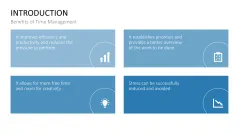
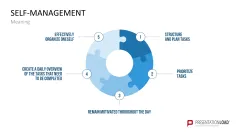
Time management means actively organizing your own time instead of just reacting. If you structure your tasks clearly and set priorities consciously, you will maintain an overview even in hectic phases. It is not about cramming as much as possible into the day, but about doing the right things at the right time. This creates more space for concentrated work, less stress, and more freedom for what really matters. Time management helps you keep your long-term goals in sight and coordinate your daily routines in a meaningful way. This makes time management a key skill for working successfully, focused, and balanced.
Individual time personalities and work rhythms
Not everyone works best at the same time. While early risers are often most productive in the morning, others only reach their peak performance in the afternoon or evening. These differences are referred to as time personalities and reflect individual biorhythms. Those who know and take their own rhythm into account can schedule tasks specifically for the phases of highest concentration and postpone routine work to less productive times. This not only ensures better results, but also reduces stress and increases satisfaction in everyday work.
Mastering time management in teams
Mastering time management in teams means harmonizing individual working methods with common goals. Different time personalities, tasks, and responsibilities require clear structures and coordinated processes. Transparent communication, shared calendars, and clear priorities help to avoid duplication of work and make optimal use of resources. This creates a reliable work rhythm in which every team member can work efficiently and collaboration runs noticeably more smoothly. At the same time, good time management strengthens trust within the team and reduces conflicts over availability or workload. It creates the basis for greater productivity, motivation, and sustainable success in projects.
Everything about time management in one PowerPoint template
Our PowerPoint template on time management helps you understand the basics of effective time management and implement them in your everyday work. It shows what time management means, what different types of time and individual approaches exist, and how proven methods help to structure tasks and set priorities. In addition, the template highlights typical challenges and offers practical solutions for successful time management in a team. You will receive a clear framework for using time resources efficiently, reducing stress, and developing a way of working that promotes long-term productivity, focus, and balance. This will not only improve individual performance, but also collaboration and efficiency throughout the company.
With this PowerPoint template you can …
- illustrate the importance of time management in a complex working environment.
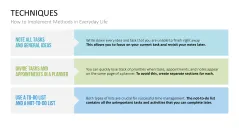
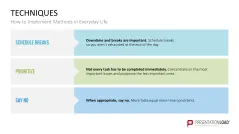
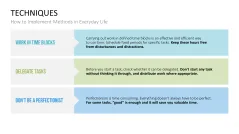
- present proven and practical methods for successful time management.
- understand how to optimize your own time management and apply it in a team.
This PowerPoint template contains:
- Quote
- What is time management?
- Definition of time management
- Why time management is becoming increasingly important
- Effective vs. ineffective time management
- Five advantages of good time management
- Consequences of ineffective time management
- Why productivity alone is not enough
- Three perspectives on time
- Time management in different areas of work
- Time personalities and individual approaches
- Canvas for choosing the right time management method
- Method matrix
- Time personalities and suitable strategies
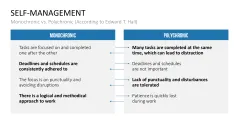
- Monochronic vs. polychronic people
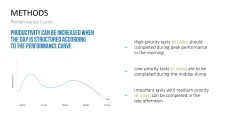
- The role of biorhythms
- Time management across generations
- Myths about time management
- Time management methods
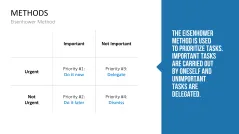
- Eisenhower Matrix
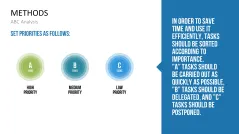
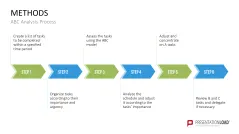
- ABC analysis
- Pomodoro Technique
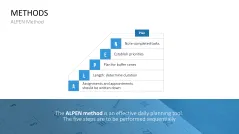
- ALPEN method
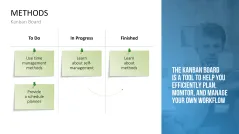
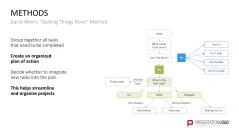
- Getting Things Done
- Getting Things Done: Decision Tree
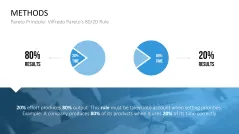
- Pareto principle: 80/20 rule
- Eat the Frog: Prioritization for greater productivity
- Time Blocking vs. Timeboxing
- Challenges
- Multitasking as a productivity killer
- The problem of constant availability: solution strategies
- Perfectionism and procrastination
- Too many tasks: Dunning-Kruger effect
- Breaks as a productivity strategy
- Strategies against time wasters at all levels
- Overtime as a warning sign for poor time management
- Time management in teams
- Time management is a team effort
- Remote work: opportunities and challenges for time management
- Synchronous vs. asynchronous communication
- Using shared calendars for time management
- Five levels of delegation and employee autonomy
- Meeting alternatives for more effective use of working time
- POST method
- IED principle for an optimized agenda
- Implementing time management
- Visualizing time management needs
- Plan tasks clearly
- Seven steps to a weekly time management plan
- 1-3-5 method
- Three-question rule
- 60-20-20 method
- Three methods for estimating task duration
- Self-test on time management